Poland's polygraph market has doubled in size since 2020, driven partly by the 1.5 million-strong Ukrainian community that resettled after 2022, and partly by continued growth in international business services. As of early 2026, Polskie Stowarzyszenie Poligrafologów lists 89 certified members, concentrated primarily in Warsaw (34), Kraków (15), Wrocław (11), and Gdańsk (8). About 60% of these specialists offer service in Russian or Ukrainian, up from just 20% in 2019. This linguistic capability has become a competitive differentiator for practices serving cross-border cases.
Legal foundation of Polish polygraph practice
Poland has one of the more permissive legal frameworks for polygraph testing in Central Europe. The procedure is legal for private and commercial purposes provided the participant gives informed written consent. Polish courts have historically taken a more open view of polygraph evidence than German or Austrian courts, particularly in civil and family matters. While polygraph results cannot serve as sole grounds for a criminal conviction, they are frequently admitted as supporting evidence, and they are widely used in mediation, settlement negotiations, and civil proceedings.
In employment law, Polish employers cannot compel workers to undergo polygraph testing. Even with voluntary consent, results cannot be the exclusive basis for termination or discipline. However, voluntary participation in internal investigations is common in sensitive positions, and the results are often used as one input into broader decisions about employee trust and access to critical resources.
Typical situations bringing international clients
Practitioners serving the international community in Poland report several recurring categories of requests. Each requires different preparation and expectations from the client.
- Marital infidelity concerns in international mixed marriages
- Business partnership disputes with cross-border complexity
- Corporate investigations of theft, fraud, or data leakage
- Pre-employment screening for sensitive positions
- Custody battles with elements in multiple countries
- Inheritance disputes involving property in different jurisdictions
- Verification of business partners before significant deals
- Preparation of legal positions for proceedings across borders
How a session works in Polish practice
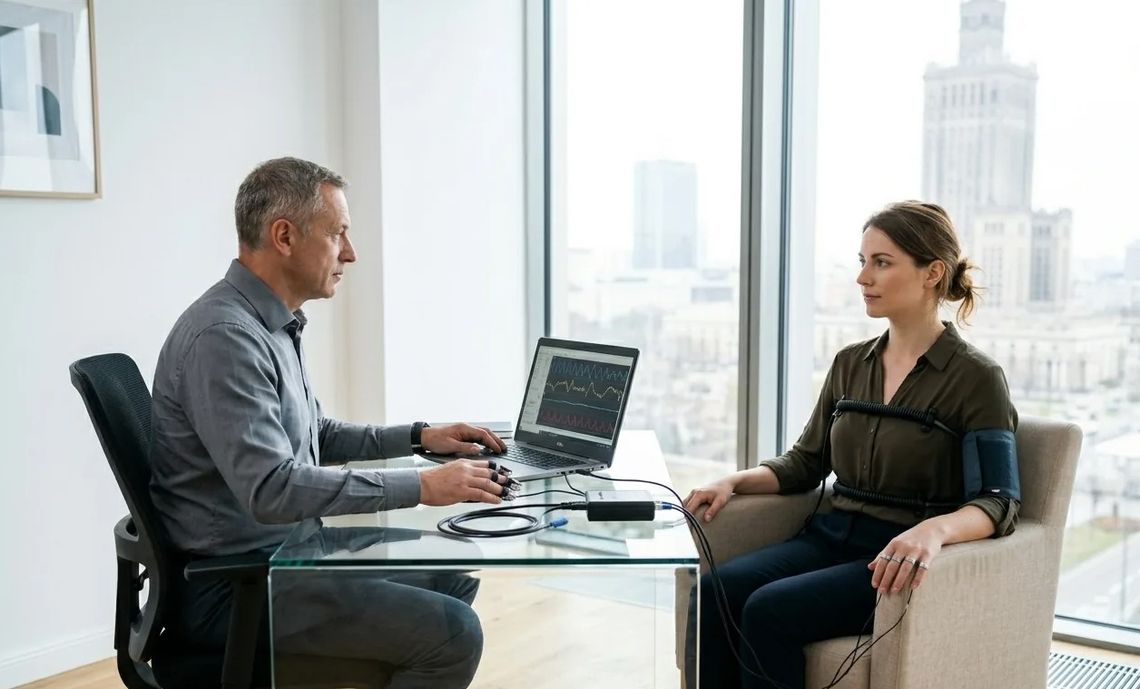
A professional session in Poland follows internationally standardized protocols. What varies for international clients is primarily language accommodation and the format of the final report.
| Phase | Duration | Note for international clients |
|---|---|---|
| Initial phone consultation | 20-40 minutes | Available in English at quality providers |
| Pre-test interview | 40-60 minutes | Question agreement in your preferred language |
| Sensor attachment | 5-10 minutes | Standard technical setup |
| Main examination | 50-90 minutes | Questions in your chosen language |
| Post-test discussion | 15-30 minutes | Initial commentary bilingually if needed |
| Written report | 1-3 working days | Bilingual on request for international use |
Cost structure and international standards
Polish prices for professional polygraph services fall in the middle range of European costs - noticeably lower than Germany or the Netherlands but higher than most Eastern European jurisdictions. This positioning reflects both the professional standards required by the market and the added value that Polish providers offer for cross-border cases involving Eastern Europe.
A basic examination with a single question typically costs 1,500 to 2,800 PLN. An extended session with two or three topics runs from 3,500 to 5,500 PLN. Bilingual reports usable in multiple jurisdictions add 500 to 1,200 PLN to the base cost. On-site visits within Warsaw, Krakow, or other major cities add 300 to 600 PLN. Rush processing for time-sensitive cases typically adds 30-50 percent to the base price. For serious international cases, engaging a qualified lie detector Poland provider with international documentation capability typically requires investing in the middle to higher end of the pricing range, but this investment pays back through the report's practical utility across multiple jurisdictions.
Selecting the right provider
The Polish polygraph market has grown significantly in recent years, with quality varying between providers. International clients should evaluate several specific factors when making their choice. Formal training with internationally recognized certification. Minimum five years of active practice with international clientele. Working knowledge of English adequate for nuanced clinical conversation. Familiarity with cross-jurisdictional documentation requirements. Modern digital polygraph equipment. Clear written contracts with transparent pricing. Willingness to decline cases that fall outside methodological limits.
An especially valuable indicator is the provider's approach to preliminary consultation. Serious professionals invest significant time in the initial phone conversation, ask many clarifying questions about your specific situation, may warn about limitations of the method for particular contexts, and offer realistic expectations for outcomes. Providers who quickly quote prices and offer immediate appointments without substantive discussion typically operate more as commodity services than as thoughtful professional practices.
Practical preparation for your appointment
Before booking, formulate your key question on paper as specifically as possible - vague concerns like general trustworthiness do not translate well into polygraph methodology. Gather any relevant documents that may help the specialist frame appropriate questions - correspondence, contracts, financial statements. Sleep at least seven hours the night before your appointment. Avoid alcohol for twenty-four hours prior. Do not take sedatives or stimulants without consulting your examiner. Eat lightly about ninety minutes before the session.
Perhaps most importantly, prepare emotionally to receive any answer, including one you would not prefer to hear. The value of objective methodology lies precisely in its impartiality, and that value only realizes for clients willing to act on actual findings rather than seek confirmation of what they already believe. This emotional readiness is often the most challenging aspect of preparation but represents the difference between a procedure that delivers real value for your life and one that becomes just another expensive complication in an already difficult situation.








Komentarze