
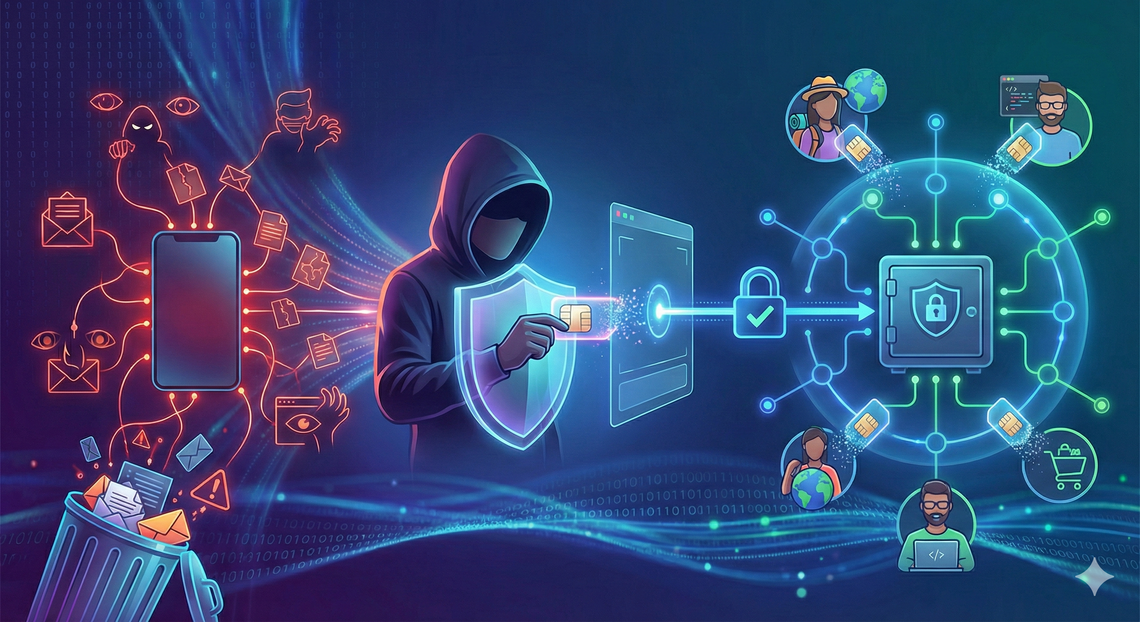
A phone number is no longer just a communication channel. It has effectively become a universal digital identifier. Once shared, it can be logged, analyzed, linked to behavioral data, and stored indefinitely. In many cases, it may also be shared with third parties for analytics, marketing, or security purposes. When data breaches occur—which has become a regular occurrence—phone numbers are often among the leaked information, leading to spam, phishing attempts, and targeted social engineering attacks.
To reduce these risks, many users are adopting temporary phone numbers as a privacy-first alternative. A temporary number allows users to complete required verification steps without exposing their primary phone number. Instead of permanently tying an account to a personal identifier, verification is handled through an isolated channel that can be discarded once its purpose is fulfilled. Using a temporary phone number helps minimize long-term data exposure while still complying with verification requirements.
This approach is particularly useful in situations where phone verification is required only once, such as account registration, access to limited features, or one-time authentication. By avoiding the reuse of a personal number across multiple platforms, users significantly reduce the possibility of cross-platform tracking and account correlation.
Temporary phone numbers are also widely used by professionals working in technical and analytical fields. Developers, QA engineers, cybersecurity researchers, and product testers often need to create multiple test accounts to validate authentication flows, simulate user behavior, or analyze security mechanisms. Using real phone numbers for this purpose is impractical and risky. Temporary numbers allow testing to be conducted efficiently without introducing personal data into test environments.
Another major advantage is protection against SMS-based threats. Phishing attacks delivered via text messages have become increasingly sophisticated, often imitating banks, delivery services, or system alerts. Attackers frequently rely on leaked phone number databases to target victims. When users limit how often their real phone number is shared, they significantly reduce their exposure to these attacks. Temporary numbers act as a buffer, receiving verification messages without putting the main number at risk.
In addition to security, convenience plays an important role. Temporary numbers eliminate the need for additional SIM cards, secondary devices, or long-term contracts. They are especially useful for users who travel frequently, work remotely, or interact with services across different regions. Many platforms impose regional restrictions that require phone numbers from specific countries. Temporary numbers help users access such services without dealing with roaming fees or local telecom providers.
For everyday users, temporary numbers provide a simple way to maintain digital hygiene. Signing up for newsletters, testing new apps, joining online communities, or accessing trial features often leads to ongoing promotional messages long after the initial interaction. By using temporary verification channels, users prevent unwanted communication from reaching their personal inbox.
Services that allow users to receive SMS online make this process even more accessible. Instead of relying on traditional mobile networks, verification messages can be received directly through a browser-based interface, offering flexibility and control without sacrificing security.
From a broader privacy perspective, temporary phone numbers align with the principle of data minimization. Users share only what is strictly necessary, for the shortest possible time. This approach reduces digital footprints, limits the spread of personal identifiers, and helps users maintain greater control over their online presence.
As awareness of digital privacy continues to grow, temporary phone numbers are becoming less of a niche solution and more of a standard practice. They offer a balanced approach that satisfies security requirements while protecting users from unnecessary exposure. In an internet environment where personal data is constantly at risk, tools that reduce dependency on permanent identifiers are no longer optional—they are essential.















Komentarze